

The Ink Illusion: Are Your "Patented" Semi-Permanent Tattoos Just Rebranded Chinese Imports?
In the age of Instagram aesthetics and TikTok "get ready with me" videos, semi-permanent tattoos have exploded in popularity.
Promising the look of a real tattoo without the lifelong commitment or the needle, brands like EZINK, TempoInk, and the global giant Inkbox have carved out a lucrative niche.
Many of these companies claim to use "proprietary," "revolutionary," or "patented" ink technology.
They present themselves as artisanal labs where artists and scientists meet.
But if you’ve ever scrolled through AliExpress or Temu and experienced a jarring sense of déjà vu, you aren’t alone.
Today, we’re pulling back the curtain on the semi-permanent tattoo industry.
We’re investigating the patent claims of major players and asking the million-dollar question: Are these companies actually "printing" unique art, or are they just middle-men for mass-produced Chinese designs?
The Anatomy of the Claim: "Patented Ink" vs. Reality
To understand the controversy, we first have to understand the technology. Semi-permanent tattoos generally fall into two categories:
-
Traditional Temporary Tattoos: These are stickers that sit on top of the skin (like the ones from cereal boxes).
-
Semi-Permanent (Fruit-Based) Tattoos: These use Genipin (derived from the Gardenia Americana fruit) or Jagua. This ink reacts with the proteins in your skin’s top layer (the epidermis) to turn dark blue or black over 24 hours.
The Investigation: EZINK and TempoInk
When you visit sites like ezink or tempo ink, you are met with sleek branding and claims of high-tech ink.
-
EZINK: They frequently highlight their "innovative semi-permanent ink" and claim to partner with "40+ real tattoo artists."
-
TempoInk (and their global counterpart Inkbox): These brands often use the trademark "For Now Ink™." They lean heavily on the "patented" nature of their formula.
The Truth About the Patents:
While Inkbox (Inkbox Ink Inc.) does indeed hold several legitimate patents (such as US Patent 11,944,700 and 10,500,145) for their specific chemical formulations and applicators, many smaller "private label" companies use the word "patented" as a marketing buzzword.
When a smaller company like EZINK claims their ink is "patented," they are often referring to the originator's patent (the factory they buy from) rather than a patent they own themselves.
In many cases, these "innovative" inks are standard Gardenia-based formulas manufactured in massive chemical plants in Guangdong or Zhejiang, China.
The Design Dilemma: 100% Similarity to Chinese Designs
This is where the "printing" claim starts to fall apart for many consumers.
If you compare the catalogs of these boutique brands with wholesale platforms like Alibaba or AliExpress, the results are staggering.
You will find the exact same "Asian Dragon," "Minimalist Moon," and "Traditional Dagger" designs.
The linework, the shading, and even the dimensions are identical.
How does this happen?
Most of these companies are Dropshippers or White-Labelers.
-
White-Labeling: A company buys 10,000 units of a pre-made design from a Chinese factory, puts it in a "Premium" box with their logo, and marks up the price from $0.50 (R9.00) to $25.00 (R450.00).
-
The "Printing" Myth: When a company says they "print" these tattoos, they often mean the factory prints them on their behalf. Very few South African semi-permanent tattoo companies actually own the specialized industrial printers required to produce Genipin-based ink transfers in-house.
If the design you bought for R300 is also sitting on AliExpress for R15, you aren't paying for "patented technology"—you’re paying for the South African brand's marketing budget.
Comparison: The South African Landscape
Let’s look at the local players and how they stack up against the "Smarter Alternative."
1. EZINK (ezink. co. za)
-
The Vibe: High-end, "Artist-driven," premium pricing.
-
The Reality: While they offer a great user experience and fast local shipping, many of their designs are indistinguishable from those found in "Magic Tattoo" kits sold globally. Their "patent" talk is largely centered on the safety of the plant-based ink—an ink that has been used by indigenous tribes for centuries and is now mass-produced in Asian factories.
2. TempoInk (temp oink. co. za)
-
The Vibe: Trendy, influencer-backed, focused on the "1-2 week" duration.
-
The Reality: Similar to EZINK, they operate on a model of high-margin retail for a product that is fundamentally a commodity in the wholesale market.
3. TeMaRo (temaro.co.za): The Disruptor
Then we have TeMaRo. Interestingly, TeMaRo takes a more transparent—and arguably more honest—approach to the market.
While EZ-INK and Temp-oInk chase the "Semi-Permanent" (2-week) hype, TeMaRo explicitly states: "Why TeMaRo Doesn't Do Semi-Permanent Tattoos."
TeMaRo’s stance is built on three pillars:
-
Avoiding "Inflated Pricing": They acknowledge that semi-permanent "fruit" ink is often used as an excuse to charge 10x the price of a standard temporary tattoo.
-
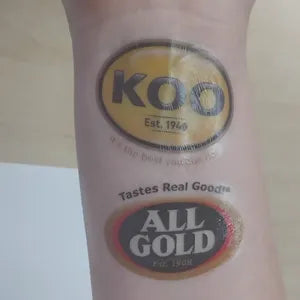
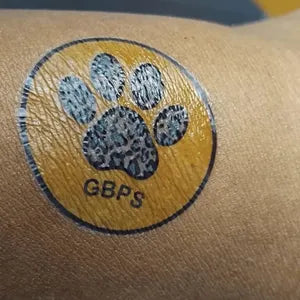
In-House Printing: Unlike brands that just import pre-made Chinese designs, TeMaRo focuses on custom temporary tattoos. They allow you to upload your artwork and they print it on-demand in South Africa.
-
Skin Safety Over Hype: They use soy-based inks and rice adhesives, focusing on the "2-3 days" duration rather than the potentially irritating chemical reaction required for 2-week tattoos.
The Comparison Table:
| Feature | EZI-NK / Tempo-Ink | TeMaRo |
| Ink Type | Gardenia/Genipin (Fruit-based) | Soy-based / Traditional |
| Duration | 10–14 Days | 2–3 Days |
| Design Source | Often mass-produced Chinese designs | Custom (Your own art) |
| Production | Imported / White-labeled | Printed in South Africa |
| Price Point | High (Premium) | Affordable (Value-based) |
The "Private Label" Trap: How to Spot It
If you are a consumer looking for a temporary tattoo, here is how you can tell if you’re buying a rebranded Chinese design:
-
Reverse Image Search: Take a screenshot of the tattoo design and put it into Google Lens. If the first results are AliExpress or Alibaba, you’re looking at a white-labeled product.
-
Generic Artist Names: If the company says "Designed by our team" but doesn't name a single specific artist with a portfolio or Instagram handle, the "team" is likely a factory in China.
-
The "Patent" Vague-Speak: If they say the ink is "Patented" but don't provide a patent number or a link to the filing, they are likely riding the coattails of a manufacturer's patent.
Is It a Scam? Not Exactly. But It Is Misleading.
Are these companies "lying"? Not entirely. The ink is semi-permanent. It is safe (usually).
However, the claim of being a "pioneer" or "designer" is where the ethics get murky.
By selling a design for R400 that cost them R10 to import, they are selling you convenience and branding, not a unique invention.
They are essentially a filter: they find the "coolest" designs on the Chinese market, ship them to South Africa, and sell them to you so you don't have to wait 3 weeks for international shipping.
The TeMaRo Difference: Realism Without the Rip-Off
In a market saturated with "Magic Inks" and mystery patents, companies like TeMaRo are refreshing because they don't try to reinvent the wheel—they just make it better.
By focusing on customization, TeMaRo gives the power back to the user.
Instead of choosing from a catalog of 100 designs that everyone else has, you can print your own personal meaning.
They aren't claiming to have "magical patented fruit ink"; they are claiming to have a high-quality, local printing process that is safe and affordable.
Final Verdict
If you want a tattoo that lasts two weeks and you don't mind that 10,000 other people have the same design, E-ZINK or Tem-poInk will give you a great-looking result.
If you urgently need orders or prefer local production, skip the "patent markup" and opt for the unique touch of a custom provider like TeMaRo.
The next time you see a "patented" tattoo ad on your feed, remember: the ink might be from a fruit, but the design is likely from a factory. Shop smart.





0 comments